

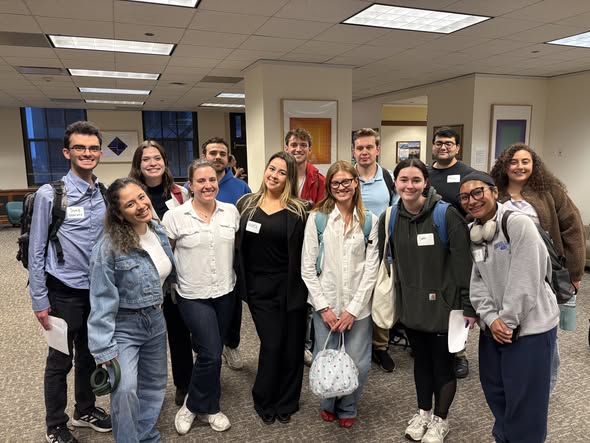
LCBH teamed up with DePaul College of Law to host a community-based Eviction Sealing Clinic in April! More than 50 student and attorney volunteers helped tenants draft 63 motions to seal old eviction records, which can create a harmful barrier to future housing. We are so grateful for partnerships like these that allow us to increase our capacity to serve renters in need.
Learn more about the impact of pro bono on law students and young attorneys from clinic co-sponsor and Director of the Pro Bono and the Community Service Initiative at DePaul, Elizabeth Boe (E), and DePaul College of Law 1L student, Finn Brent (F) below:
How do clinics play a role in getting students and young attorneys interested in pro bono and public service law?
E: Clinics, as hand-on discrete pro bono opportunities, are fantastic ways to get students interested in pro bono and public service law. They allow all students to try out areas of law in small pieces that work well with their schedules, experience direct client interactions, and gain critical legal skills all under fantastic supervision by attorneys and other legal professionals. Clinics also often produce tangible results that students can see in the immediate, whether it is clients walking away with the paperwork they need to file immediately or other direct next steps.
F: First of all, activities like clinics are great because they offer a low-level commitment to explore different practice areas. Second of all, pro bono activities are a great way to help out the community in large. Lawyers can provide protections against inequity, and when they are made accessible to everyone via pro bono events, people who might generally be unable to fight these legal inequities can be aided.
Why were you interested in participating in an eviction sealing clinic, specifically?
E: DePaul is committed to working alongside our community partners to directly address the most pressing societal issues in our community such as access to housing. It was a perfect fit to provide space and resources to have our law students working with LCBH to actively support clients in the community seeking access to housing via eviction sealing actions. Hosting a clinic allowed our students to participate in a discrete but impactful experience that strengthened their legal skills and clearly demonstrated the impact of pro bono activities.
F: Participating in the Sealing Clinic allowed me to gain hands on experience with property law. Law school classes can feel very information heavy and theoretical at times, so it was valuable to be able to apply some of the knowledge we have learned and put our ‘issue spotting’ into action. For example, I had a discussion about improper notice with a client. This immediately raised a red flag because we learned shortly before about proper process during judicial eviction proceedings.
What advice would you give a student or practicing attorney who is hesitant about getting involved with pro bono?
E: Do it! There are so many types of pro bono activities that truly anyone can find one or more to connect with. You will be supported by organizations like LCBH with great training, resources, and supervision, gain great skills, and most importantly, make a tangible impact in your community.
F: I would tell someone who is hesitant to get involved with pro bono work to enter with an open mind. Throughout my first year of law school, I have been able to gain pro bono experience in property law and criminal law, that has allowed me to see the processes we discuss in class in action, in areas of the law that I hadn’t truly considered to be areas of interest beforehand.